
Harakaat in Arabic: Fatha, Kasra and Damma Explained
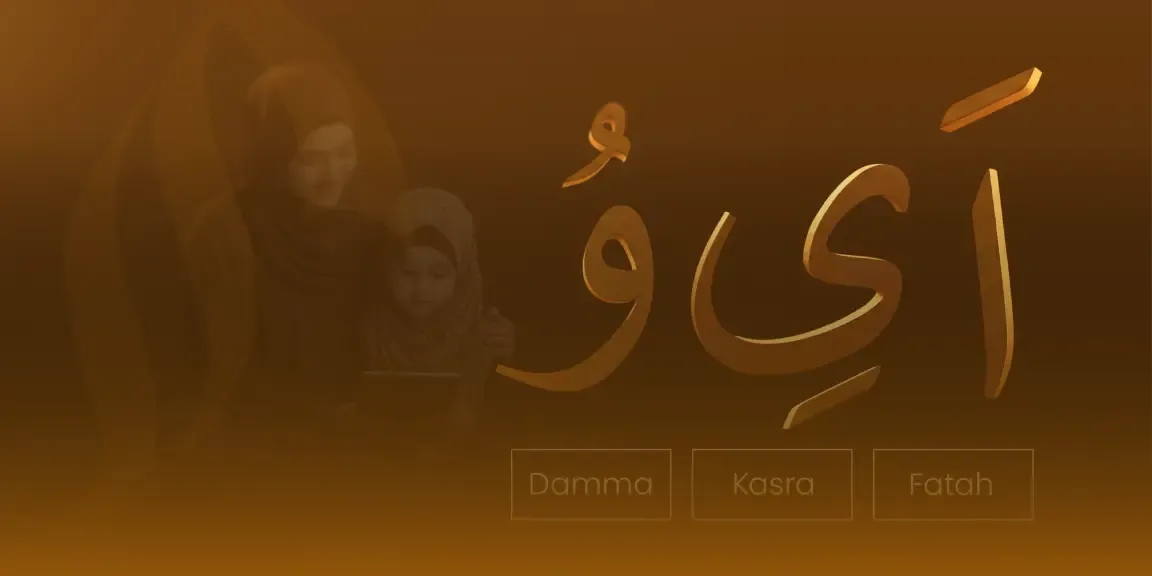
A child can recognize an Arabic letter and still hesitate when a tiny mark appears above it. Adults returning to Quran reading often face the same problem: the letter looks familiar, but its sound feels uncertain.
Harakaat in Arabic removes that guesswork. These vowel marks help readers pronounce letters correctly and distinguish short sounds from longer ones. This guide explains Fatha, Kasra and Damma through a simple chart, pronunciation guidance, Qaida-style examples and practical corrections for beginner mistakes.
What Are Harakaat in Arabic?
Harakaat are vowel marks that indicate how an Arabic letter is pronounced. The three basic short-vowel marks are Fatha, Kasra and Damma, representing short a, i and u sounds.
The singular is harakah. English spellings include harakat and harakaat.
Consider the letter ب. Its name is baa, but its sound in a reading exercise depends on its mark:
- بَ — ba
- بِ — bi
- بُ — bu
The consonant stays the same. The vowel changes.
Tashkeel is a broader term for Arabic vocalization marks. Alongside the three short vowels, readers encounter signs such as Sukoon, Shaddah and Tanween. These signs have different functions and should not all be treated as extra short vowels.
Fatha, Kasra and Damma: Symbols and Positions
A mark’s position matters as much as its shape. Fatha and Kasra look similar, but one sits above the letter and the other below it.
Vowel mark
Arabic name
Position and shape
Short sound
Example
Urdu teaching name
Fatha
فَتْحَة
Small slanted stroke above the letter
a
بَ — ba
Zabar
Kasra
كَسْرَة
Small slanted stroke below the letter
i
بِ — bi
Zer
Damma
ضَمَّة
Small curl resembling a miniature و above the letter
u
بُ — bu
Pesh
Zabar, Zer and Pesh are alternative teaching names often used in Urdu-speaking households. They refer to the same three marks.
Use a clear Arabic font when practicing. On a small phone screen, a Kasra may be easy to overlook, especially when several letters join together.
How to Pronounce the Three Short Vowels

Pronounce the consonant and its vowel together. Reading بَ means saying ba, rather than saying the full letter name baa followed by “Fatha.”
The English letters below are reading aids. Listening to a clear spoken example remains essential because English vowel sounds vary by accent.
Fatha: A Short “a” Sound
Fatha produces a short sound after the consonant.
Examples include بَ — ba, تَ — ta and مَ — ma.
Open the mouth naturally and keep the vowel brief. Avoid turning ba into bay or stretching it into baa. The surrounding Arabic consonant can affect the vowel’s quality, so an English word is never a perfect pronunciation model.
Kasra: A Short “i” Sound
Kasra produces a short i sound.
Examples include بِ — bi, تِ — ti and مِ — mi.
Keep the sound brief and avoid turning it into an eye. A teacher can demonstrate the difference between short بِ — bi and long بِي — bī more clearly than English spelling alone.
Damma: A Short “u” Sound
Damma produces a short u sound.
Examples include بُ — bu, تُ — tu and مُ — mu.
Round the lips without holding the vowel. Avoid substituting the English you sound, which adds an unwanted consonant before the vowel.
For learners exploring guided Quran study in the UAE, Awqaf’s Quran education service describes learning through Quran centers, mosque circles and a smart teaching platform. Whichever setting you choose, ask the teacher to model each vowel and then listen to your version.
How Harakaat Apply to Arabic Letters
Read the letter together with its written vowel. Changing the mark changes the pronunciation, even when the consonants remain identical.
For example:
- كَتَبَ — kataba: he wrote.
- كُتِبَ — kutiba: it was written.
Both words contain ك, ت and ب. Their vowel patterns distinguish the two forms and their meanings. This is why guessing from familiar letter shapes can lead to incorrect reading.
Keep Short Vowels Distinct From Long Vowels
Fatha, Kasra and Damma are short vowels. Compare these practice syllables with the corresponding long vowels:
Short vowel
Long vowel
Difference
بَ — ba
بَا — bā
The following Alif lengthens the a sound
بِ — bi
بِي — bī
Yaa functions as the long ī vowel
بُ — bu
بُو — bū
Waw functions as the long ū vowel
These are sound comparisons, not separate vocabulary words. Waw and Yaa also function as consonants in other contexts.
In introductory Tajweed timing, a short vowel is commonly described as one count and a basic natural long vowel as two. These are relative durations within the recitation pace, not fixed numbers of seconds.
Recognize Standing Vowel Signs Separately
Some Qaida and Quran print styles use standing Fatha, standing Kasra and inverted Damma, also called Khari Zabar, Khari Zer and Ulta Pesh.
In the relevant reading conventions, these indicate lengthened vowel sounds. They should not be read as ordinary short Fatha, Kasra or Damma. Follow the notation in your own edition and have a teacher demonstrate the distinction.
Sukoon introduces another contrast: it indicates that the consonant has no following short vowel. A letter with Sukoon should not receive an added a, i or u.
Harakaat Practice With Qaida-Style Examples
Begin with one familiar consonant so that only the vowel changes. Read the three examples in each row separately.
Letter
Fatha
Kasra
Damma
Baa
بَ — ba
بِ — bi
بُ — bu
Taa
تَ — ta
تِ — ti
تُ — tu
Jeem
جَ — ja
جِ — ji
جُ — ju
Meem
مَ — ma
مِ — mi
مُ — mu
Noon
نَ — na
نِ — ni
نُ — nu
Next, change the order. Try بُ, then بَ, then بِ. This checks whether you are reading the marks or simply remembering the sequence ba, bi, bu.
Once individual sounds are steady, try fully marked words:
Practice word
Read as
Meaning
What to notice
كَتَبَ
ka-ta-ba
He wrote
All three letters carry Fatha
سَمِعَ
sa-mi-ʿa
He heard
The middle letter carries Kasra
كُتِبَ
ku-ti-ba
It was written
Damma changes to Kasra, then Fatha
The symbol ʿ represents ع, an Arabic consonant without a direct English equivalent. Hear it from a teacher before using the word as independent pronunciation practice.
These are beginner exercises, not reproductions of a particular Qaida page.
Common Harakaat Mistakes and How to Correct Them
English-speaking beginners can recognize the marks correctly while still producing the wrong sound. Check recognition and pronunciation separately.
Stretching Every Vowel
A learner reads بَ as bā, giving a short vowel the length of a long one.
Practice بَ beside بَا with a teacher. Keep both clear while preserving the difference in duration.
Confusing Fatha and Kasra
The student notices the stroke but misses whether it is above or below the letter.
Enlarge the text and identify the position before reading. Then repeat without naming the mark.
Reading the Letter Name
The student says baa for بَ instead of ba.
Separate alphabet naming from sound practice. Ask first, “What is this letter?” Then ask, “How does it sound with this mark?”
Relying on Roman Letters
The student follows ba, bi, bu without checking the Arabic.
Cover the transliteration after the first demonstration. Point to the Arabic examples in a different order.
Repeating a Memorized Pattern
A familiar row sounds fluent, but a new arrangement causes hesitation.
Mix the same letters and marks into fresh combinations. A correct unfamiliar example is a better sign of reading progress than a fast memorized row. If the same mistake keeps returning, a tutor can help distinguish a missed symbol from a vowel-length or articulation problem.
Where Harakaat Fit in Noorani Qaida
Harakaat comes after the student begins recognizing Arabic letters and their forms. They provide the next step from naming letters to reading vowelled sounds.
Al Asr Quran Academy’s published course outline places Vowel Marks (Harakaat) fourth in its sequence. Check the contents page of the Qaida you use before applying that numbering to a printed book.
The practical goal matters more than the page number: recognize Fatha, Kasra and Damma, pronounce each correctly, and read unfamiliar combinations without guessing.
Tanween then introduces related endings commonly represented as an, in and un. Further practice distinguishes short vowels from Sukoon, long vowels and doubled consonants.
How a Tutor Can Check Harakaat Reading
A useful check goes beyond asking the student to name the three marks. A tutor can assess whether the learner can:
- Identify each mark on different letters.
- Read mixed examples without Roman spelling.
- Keep short vowels brief.
- Distinguish a short vowel from its long counterpart.
- Maintain the consonant’s correct articulation as the vowel changes.
- Apply the same skills to a new, fully marked word.
For learning from home, Al Asr Quran Academy offers private online lessons with male or female teachers. A free trial Quran class provides a starting-point assessment before enrollment.
Frequently Asked Questions About Harakaat
How Many Basic Harakaat Are There?
There are three basic short-vowel marks: Fatha, Kasra and Damma. Other Arabic reading signs have separate functions.
Are Harakat and Harakaat Different?
No. They are different English spellings of the same Arabic term. Harakah is the singular form.
Are Fatha and Zabar the Same?
Yes. Fatha is called Zabar in Urdu teaching terminology. Kasra corresponds to Zer, and Damma to Pesh.
Can Adults Start With Harakaat?
Yes. Adults who know the letter shapes but hesitate over vowel marks can practice these sounds directly. Learners who cannot yet identify the letters should start with alphabet recognition.
Can I Learn the Sounds From a Chart Alone?
A chart explains which mark produces which vowel. Listening and individual feedback help confirm whether you are producing that sound correctly.
Are Harakaat and Tajweed the Same?
No. Harakaat indicates vowels. Tajweed covers a wider set of recitation principles, including articulation, letter characteristics, lengthening and other rules.
Why Do Some Arabic Texts Have No Harakaat?
Many everyday Arabic texts omit most short-vowel marks because experienced readers infer pronunciation from vocabulary, grammar and context. Beginner materials include them to support reading. Quran study requires attention to the written notation and the recitation being taught.
Ready to start learning the Quran?
Book a free trial class with a certified tutor — no credit card, no commitment.
Book Your Free Trial